


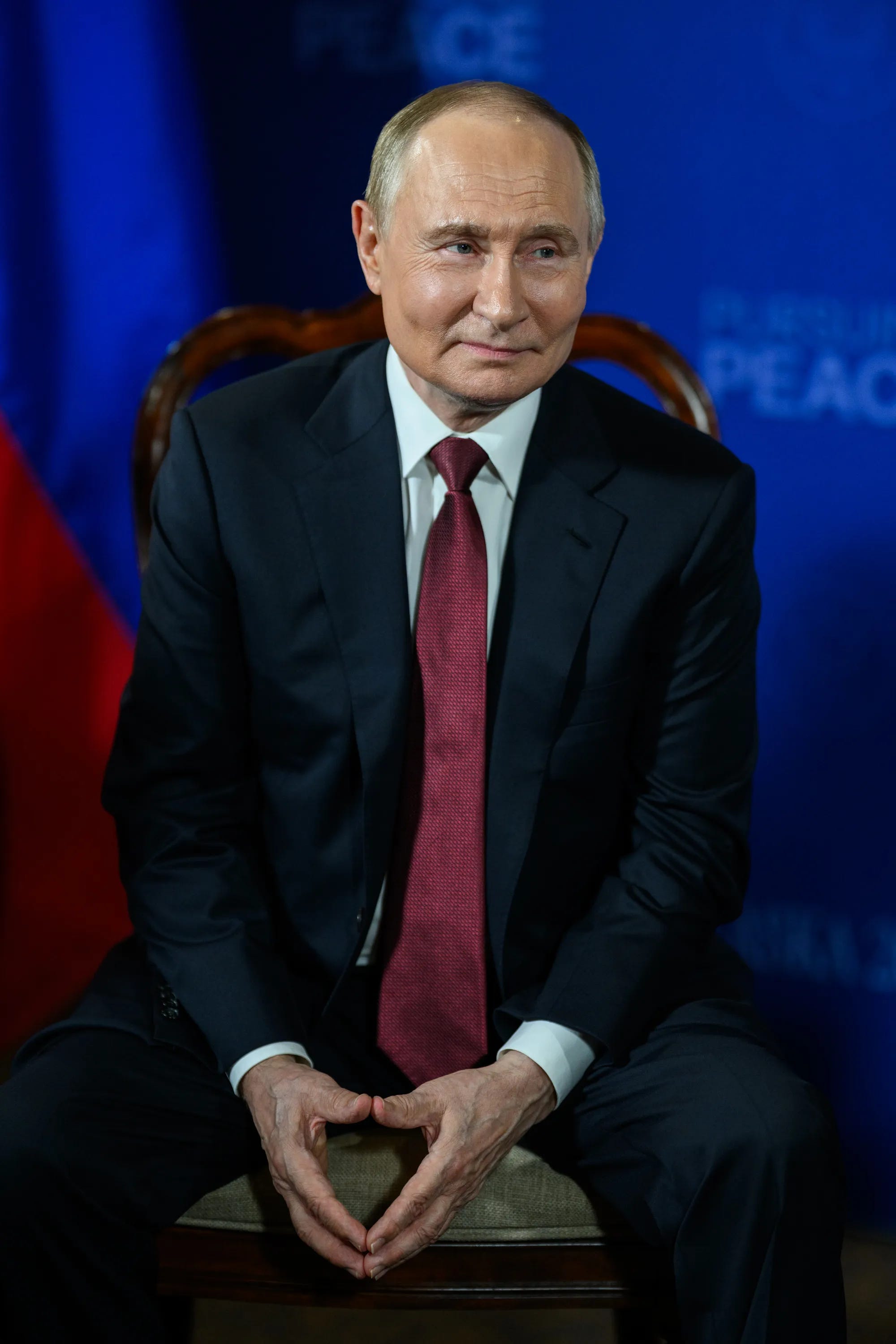
In his press conference with Ukrainian President Zelenskyy last week, President Trump was asked whether he had asked himself if Russian President Putin might be playing him.
Yeah I am but you know, I’d been played all my life by the best of them, and I came out really well. So it’s possible. Yeah, a little time. It’s alright. But I think that I’m pretty good at this stuff. I think that he wants to make a deal.
The comment was revealing. Trump knew he was being played by Putin. He just thought he would outsmart the former KGB officer. So far, the evidence suggests otherwise.
“Win back all its territory”
For weeks, Trump and Zelenskyy had been talking about how the US might assist Ukraine militarily, especially by providing long-range missiles, like the Tomahawk cruise missile, that could strike deep into Russian territory. When the two leaders met at the United Nations, in September Trump indicated that he was ok with Ukraine striking deep into Russian territory. “Use the ability to hit deep,” Trump’s Ukraine envoy Keith Kellogg told CNN, quoting the president. “There are no such things as sanctuaries.”
At one point, Trump went even further, suggesting Ukraine could actually win the war.
After getting to know and fully understand the Ukraine/Russia military and economic situation, I believe Ukraine — backed by the European Union and NATO — can win back all its territory. Why not? Maybe even go further than that!
Additional conversations ensued in the days following these statements, including two calls between the two leaders in the week prior to Zelenskyy’s White House visit set for last Friday. All indications were that Trump would agree to sell NATO the Tomahawk missiles that would then be sent to Ukraine. The Wall Street Journal even reported that the US was providing new intelligence to enable deep strikes into Russian territory.
“Hi Donald, it’s Vladimir”
Then came the call. Putin congratulated Trump on his historic peace deal in the Middle East, suggested he could do the same for Ukraine and Russia, but that sending long-range weapons like Tomahawks was an escalation that would make an end to the war very difficult. Even while the call was happening, Trump posted that he was talking to Putin. And when it was all said and done he hailed the conversation, said real progress had been made, and announced that a summit between the two leaders would soon be held in Budapest.
Predictably, the next day’s meeting with Zelenskyy did not go well. According to the Financial Times, Trump repeated Russian talking points, saying Ukraine was losing the war and that if Kyiv did not accept Moscow’s terms Ukraine would be “destroyed” by Russia. Putin, he insisted, wanted a deal. And if giving up all of the Donbass to Russia could end the war, that was a deal well worth taking, Trump argued. As for the Tomahawks, Trump now argued that these “vicious” weapons were very dangers and could result in escalation, again echoing the Kremlin’s talking points.
Zelenskyy left Washington empty-handed. While Trump called on both sides to halt the war at the line of confrontation — even to accept Donbass being cut in half — Russia had achieved its objective by halting the transfer of the long-range missiles. Within days, the White House concluded that there would be no meeting with Putin. Russia’s position had not changed. There had been no progress. No deal was to be had.
No End to War
However much Trump wants it, even needs it, there is no end in sight for Russia’s war against Ukraine. It’s his desire to end the fighting and get the credit for doing so that drives Trump forward. But that desire is a weakness Putin has skillfully exploited ever since Trump’s return to the Oval Office. In their first phone call back in February, Putin suggested he was willing to end the war but Trump had to deliver Ukraine. Trump tried to do so in the disastrous meeting in the Oval Office with Zelenskyy, where he told the Ukrainian leader who had led his nation in armed resistance for three years that he didn’t “have the cards.”
When Zelenskyy then agreed to a ceasefire at Trump’s urging, Russia stalled, demanding that any halt to the fighting could only come after what it called the “root causes” of the conflict had been addressed—essentially Ukrainian capitulation before any cessation of hostilities. During the summer, Trump tired of Putin and at times grew angry, dismissing his “bullshit” and threatening “sever economic consequences.” Putin then proposed a summit in Alaska, and once again turned Trump around—arguing that a full peace would need to be negotiated (on Russia’s terms, of course) before the fighting could stop. Trump bought the argument, and ended the threat of economic sanctions.
And this week, when Trump seemed ready to help Ukraine increase its capabilities against Russia by sending long-range missiles, Putin’s call once again turned Trump around.
Trump needs to understand that he cannot want peace more than the actual parties that anre engaged in war. He can cajole, threaten, and seek to persuade. But ultimately, this war cannot and will not end until Russia accepts that the cost of continuing to fight exceeds the benefit of halting it short of victory. We’re nowhere near that point.
Indeed, the more Trump wants to end the war, the more Putin can play him to serve his ends. Trump may recognized that he’s being played, as he said on Friday. But if he thinks Putin wants to make a deal that is acceptable to Ukraine, Putin will continue to play him. Again. And Again. And Again.
What's particularly galling (and obvious) is that Trump thinks *he's* in control. And I don't think we can ascribe it to his dementia -- he's always been this way.
His smile really annoys me. It’s evil and deceptive simultaneously