


No way.
Even with the conclusion of a deal, which could happen any moment now, the Iran War was a strategic disaster of historic proportions. That conclusion stands so long as the Iranian regime remains in power, effectively controls access to the Strait of Hormuz, and retains its nuclear ambitions, know-how, and capabilities. The pending deal changes none of that.
Axios and other media this morning report on the likely contours of the US-Iran deal that both sides say will likely be concluded today. According to Barak Ravid, who is unusually well-sourced, the main elements of the deal would be a memorandum of understanding to end the war. It would last 60 days and could be extended by mutual consent. During these 60 days,
Iran would allow full access to shipping through the Strait of Hormuz and agree not to charge tolls.
The US would lift its blockade of Iranian shipping and allow Iran to sell oil on the open market.
The end of the war would extend to Lebanon.
Iran would commit not to develop nuclear weapons and agree to negotiate over halting enrichment and the disposal of its stockpile of enriched uranium.
The US would negotiate the lifting of sanctions and unfreezing of Iranian assets, though final decisions would be linked to Iran’s nuclear commitments.
According to several reports, Iran has given the United States verbal assurances that it would be willing to freeze its enrichment, though for less than the 20 years Trump has indicated he would find acceptable. Tehran has also suggested that it would be willing to dilute and possibly remove the uranium stockpile that it enriched above 20 percent.
Worst Deal Ever?
In announcing his decision to abandon the 2015 Iran nuclear deal, Trump in 2018 called it the “worst deal ever.” It was no such thing—and as I argued here a few days ago, had it remained in force, Iran today would be sitting on just 300kg of uranium enriched up to 3.67%—not 8,500kg of uranium with large parts of it enriched to 20% and even 60%.
Although this deal to end the war may not be the worst deal ever, it is a clear admission by Trump that the war was a mistake that has left everyone—not least the United States and its erstwhile allies—worse off. Consider:
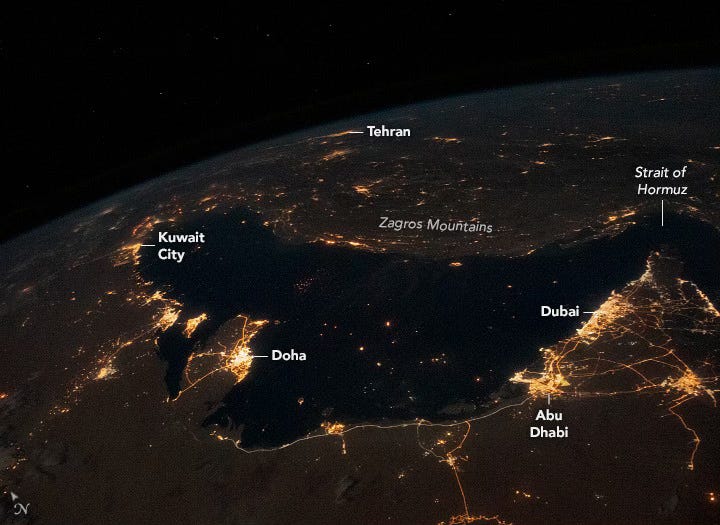
Shipping through the Strait has been disrupted for almost three months and will take months to return to normal, even with this deal. Prior to the war, shipping occurred without any thought or fear of disruption.
Iran will be allowed to sell oil on the open market, something it was prohibited from doing before the war. And it will benefit from higher oil prices that were caused by the war and no longer need to sell its oil at a steep discount to sanction-breakers like China.
While Iran agreed not to charge tolls for 60 days, it retains effective control of the Strait and may insist on a tolling regime as the price for a nuclear agreement.
Iran’s commitment not to develop nuclear weapons—apparently the only firm nuclear-related commitment in the MOU—is nothing new and existed prior to the war. If anything, the war has created a much greater incentive for Tehran to abandon that commitment in the future.
Iran’s apparent verbal commitments on enrichment and the disposition of its stockpile are meaningless. And while the US commits to keep its military forces in the region for the next 60 days, every day without military strikes makes its resumption less, not more likely.
Strategic Folly
Meanwhile, the larger strategic consequences of the war remain:
The Iranian regime now in power is more hardline and less interested in limiting its power or meeting the needs of the Iranian people than any other regime that has ruled since the 1979 Islamic Revolution.
Iran has discovered that controlling access to the Persian Gulf and its resources provides real leverage over the global economy—that won’t change.
America’s relations with Gulf allies, most of whom opposed Trump’s decision to go to war, have been severely weakened. Iran retains the capacity to attack them and their energy resources and the US can do nothing about it.
Israel, meanwhile, is learning that Trump will ignore its interests if they clash with his own.
America's NATO allies now know that Washington is an unreliable ally — one willing to punish its closest partners with tariffs and troop withdrawals out of sheer petulance.
China has learned a lot about how the US military fights and now knows that America’s industrial base is unable to sustain a major conflict for long. It also sees the US bogged down in the Middle East—at the expense of its presence and capabilities in the Indo-Pacific.
Russia has made millions on energy sales precisely at a time when its economy was running into trouble. And it knows it can count on Trump to lift oil and perhaps other sanctions, while doing nothing to limit its fight with Ukraine.
How to Lose a War
The Iran War has been a disaster. Trump, no doubt, will boast that he is the only president who could have gotten this amazing win. Few will believe him.
Unless the pending deal has terms that are fundamentally different from what has been reported by US sources, Trump’s acceptance is an effective admission that he lost the war.
Fine piece, Ivo, but it makes no mention of US military presumptions, assumptions, experiences, and failures/disappointments. This is Shock and Awe Redux, and someone needs to discuss it at length. Who said what to whom throughout the US security community, especially within DoD and between DoD and the White House? What are we loking at here: another example of failure of strategic bombing (repeating the lesson of WWII stratbombing survey)? Intel failure? Political suppression of competent mil/intel analysis? This must not go unexamined, especially given the loss of US military lives and the massive losses of US military equipment plus the revelations of supply chain inadequacies. RAK
Good that you pointed out one of the real problems with Iran's capability to develop nuclear weapons. Even if all enriched uranium goes away they still have the science and knowledge to recreate their nuclear program. I would like the news outlets to make this point which I believe most Americans have not been clued into.