

World Review: The State of NATO
This week's World Review looks at what I learned during my visit to NATO Headquarters this week

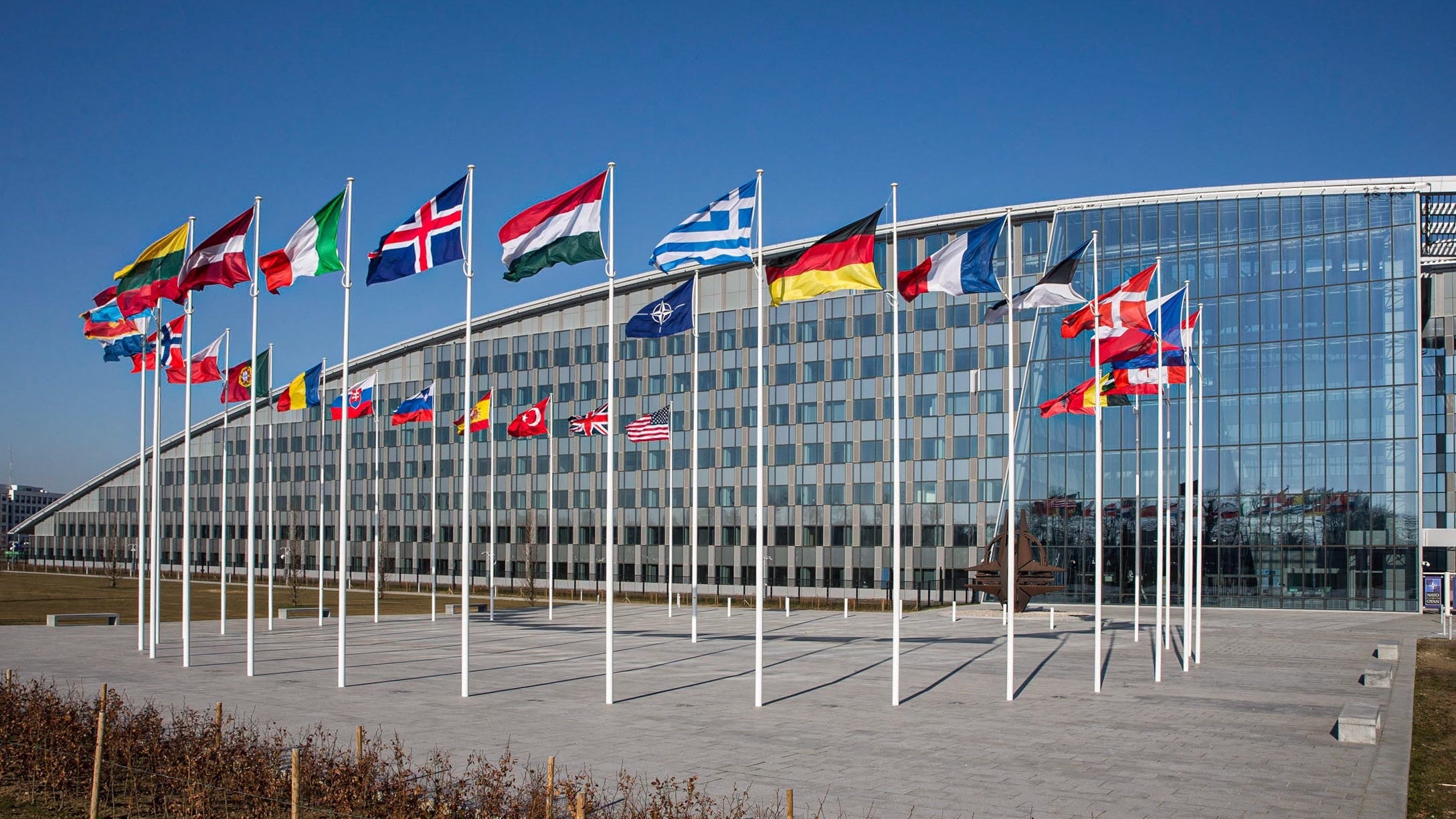
Every Friday, while my podcast “This Week with Ivo Daalder” is on hiatus, I will write about major news stories and give my perspective as well as that of others. This week I share my impressions on the state of NATO.
Please subscribe here and share my posts with your contacts.
This week, I visited NATO headquarters for the first time since Donald Trump returned to power. I spoke with ambassadors from more than half the member nations, met with key officials on the NATO staff, and had detailed discussion with members of the US Mission at NATO. I found an alliance in transformation, still uncertain of how the changes in Washington will play out but at the same time determined to confront the growing threat from Russia.
Here are some of my key impressions
NATO is more united than I had expected. The June Summit meeting in The Hague, where NATO nations agreed to spend 5 percent of their GDP on defense and defense-related investments, has brought the alliance together. Prior to the Summit, many allies worried that the United States might decide to reduce its involvement, if not withdraw altogether. But NATO Secretary General Mark Rutte, working with key allies, including the US Ambassador to NATO, Matthew Whittaker, was able to produce a consensus among allies that a major increase in defense spending and rebalancing of responsibilities was necessary to keep the United States involved. NATO delivered, and fears of American withdrawal have eased considerably.
Meeting the spending goals will be tough. It’s one thing to commit to spending more on defense, another to deliver. Nordic countries and nations located near Russia, are all committed to meeting the target. Poland and Estonia will do so this year. Germany’s draft budget also foresees reaching the 3.5 percent real defense goal by 2029. But many others will not be able to get to this goal soon, if ever. Spain has said explicitly it will not spend more than a little over 2 percent on defense. Italy would like to meet the goal, but doesn’t have the budgetary space or political room to get there. The same is true for France, which faces a deep budgetary crisis, and likely for Britain. Nevertheless, a significant amount of new money will be available to strengthen NATO’s overall defense and deterrence capabilities.
Allies are committed to rebalancing the Alliance. When people say NATO is a US-led alliance, they are not wrong. Over more than 75 years, the Alliance has evolved into a military organization that is built around a US core. The American military dominates the command structure, plans for the defense of NATO, and dictates the manner in which allies would fight. Other allies plug into this US-centered system. With Washington insisting that Europe take over the primary responsibility for the conventional defense of Europe, that system needs to be transformed into one led by European capabilities, planning, and war-fighting ethos. Rather than dominating, the US would then plug into the system, much as European militaries have long done. This is an exceedingly difficult and time-consuming exercise, and European allies are only beginning to grapple with its complexity. The good news, for now, is that the US seems committed to working with its NATO allies to effect this transformation
Many allies still hope the US will reconsider its position and return to a leadership role. I was frankly surprised to see a good number of allies holding onto the idea that things will get back to normal. Even if they do not see much hope for the current administration, key allies hope that the next president will return to the policies and leadership role within NATO that has been the mainstay of US policy since the 1940s. At the same time, others realize that things have changed and there is no going back. They want to move forward with Europeanizing the alliance as quickly as possible, reduce dependence on the United States, and in that way hope to convince Washington to retain an active role and presence in the Alliance.
Russia is the pacing threat. Although there continue to be significant differences among allies about the immediacy and full scope of the Russian military threat to NATO proper, that threat is now the main focus of NATO’s defense efforts. Everyone realizes that after the full-scale invasion of Ukraine, a military confrontation with Russia is no longer just a theoretical possibility. It’s real and growing, given how Russia’s economy is now fully focused on supporting the war effort. Indeed, NATO intelligence assessments suggest that Russia’s military may be stronger after the war with Ukraine ends than when the war started. There is also a growing appreciation that Russia is actively targeting Europe, through sabotage, assassinations, cyber attacks, aerial incursions and more. I arrived in Brussels on the same day NATO ambassadors deliberated for 5 hours on how to respond to future incursions by Russia into their airspace, as 3 Russian MIGs as done over Estonia a week before. While allies differed about how to respond—with some urging an explicit statement that the next incursion could lead to a shoot down and others worrying about escalation—no one doubts the threat is constantly growing.
Concern with China is rising. The US has long attempted to convince its NATO allies to take the Chinese threat more seriously. The Alliance has built an Indo-Pacific partnership with Australia, Japan, New Zealand, and South Korea (the so-called IP4) as part of this effort. Some allies, notably France, have been weary of involving NATO in the Indo-Pacific, but this attitude is changing—mainly because many now see China directly and indirectly affecting their security in Europe. China’s support for the Russian war effort has been one reason for this change. But China’s growing presence in Europe, including the Arctic, has drawn new attention to its ambitions and has solidified the idea that closer cooperation with NATO’s IP4 partners.
Ukraine remains a sticking point in US relations with Europe. Nothing has done more to undermine transatlantic relations than Washington’s changed course on Ukraine. Few allies still trust the Trump administration on the issue. The president’s turnaround on Ukraine earlier this week—saying Ukraine can win back all its territory and that Russia was a “paper tiger”—were widely dismissed as an attempt to blame others for the failure to end the war. The scheme by which NATO countries buy American equipment for Ukraine—the so-called PURL1 initiative—is seen to have bought Ukraine and Europe some time, but is widely disparaged among allies who resent the president trumpeting the big checks they are paying for the defense of Ukraine. At the same time, it has bolstered European determination to take responsibility for establishing a security force inside Ukraine once a ceasefire is reached.
All in all, NATO is in better shape than I had expected. Trump’s triumph in The Hague earlier this year has put to rest any thought of the United States walking away from Europe anytime soon. Instead, US officials seem determined to work with their European partners to rebalance the Alliance from a US- to a European-led organization, This takes money, time, and US cooperation. I’m more confident now that the US will provide the cooperation needed to help enable this transformation.
But—and it is a big but—Europe needs to step up and realize that this rebalancing is essential for its long-term security. The United States is not a reliable ally; it’s no longer trusted. Outsourcing your security to a country that you can’t count on is not an option. It’s vital for the future of NATO that European allies not only understand this, but act accordingly.
Prioritized Ukraine Requirements List
Informative article, thank you. Can you write in the future about NATO and defense procurement, e. g. American and European weapons systems and how this impacts the power structure of NATO? I have read a bit about this and feel that it is vital that Europe and NATO move away from reliance on U.S. provided sytems given the unreliability of the U.S. as an ally.
I see an urgent need for Europe to develop their own security and to support Ukraine now. I take a pessimistic view of your impressions.
The fact that many Europeans are intent on waiting-out Trump and resuming the old dependence is grim. NATO is not moving in a positive direction, they are stuck in the past. I know they talk of a slowly evolving greater self-sufficiency. It will never happen as long as the U.S. crutch is on the menu of options.
THe perception that the U.S. is more NATO-friendly when Europe announces future defense spending hikes is a mirage. The U.S. is strictly mercantile now. NATO defense obligations are meaningless. Trump is at economic war with the EU; he sees the EU as a competitor in all spheres. Trump is an arms merchant for NATO, nothing more. THe strategy is to increase European dependence on U.S. arms. Every aspect of the recent EU-U.S. trade framework discourages European arms development.
NATO would be in a healthier state if the U.S. formally announced plans to withdraw from NATO. That's not the only way forward, but I'll take the chemotherapy before what we see now.