

World Review: The Alaska Summit and the Future of Ukraine
This week's one big story in the news.

In the course of the week, I had expected to comment on three big stories this week — efforts to end the war on Ukraine, Nvidia and ADM’s agreement to pay the US 15 percent of any chip sales in China, and what the Wall Street Journal'‘s Greg Ip calls “The US Marches towards State Capitalism with American Characteristics.” But as readers of this substack will know, I spent much of the week since returning from France reflecting and commenting on the Alaska Summit meeting between Presidents Donald Trump and Vladimir Putin on Friday. So that will be this week’s main reflection.
My perspective on the meeting is summed up by this quote on the front page of today’s the New York Times:
“He got played again,” said Ivo Daalder, who was ambassador to NATO under President Barack Obama. “For all the promises of a cease-fire, of severe economic consequences, of being disappointed, it took two minutes on the red carpet and 10 minutes in the Beast for Putin to play Trump again. What a sad spectacle.”
Any way you cut it, Anchorage turned into a disaster. Let’s review how we got here and where we are now heading.
““We get a lot of bullshit thrown at us by Putin”
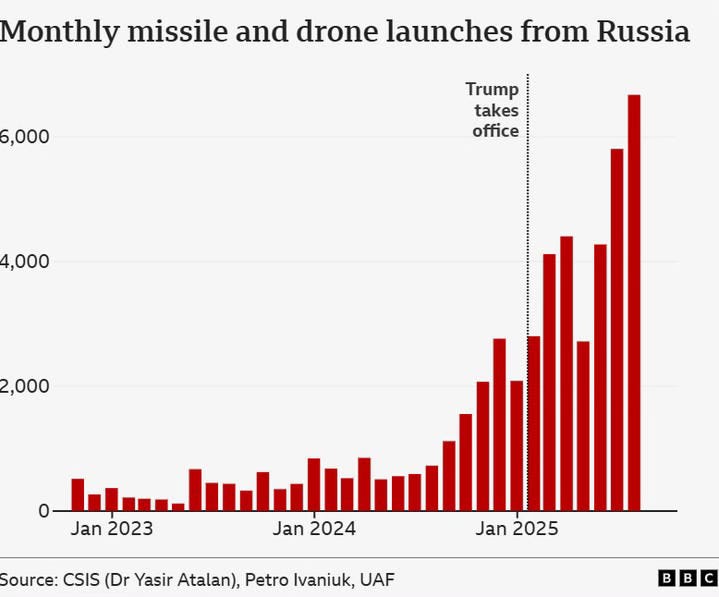
It all started a few weeks ago with Trump’s growing “disappointment” with Putin’s unwillingness to end the war. Despite five phone calls, a dressing down of Ukraine’s President on global television, and numerous overtures, Putin wouldn’t budge. Instead, ever since Trump returned to power in January, Russia had intensified its bombing of Ukrainian cities — doubling in intensity compared to previous years.
In mid-July, Trump agreed to sell NATO weapons to give to Ukraine and threatened to impose sanctions and secondary tariffs on Russia and its trading partners if it didn’t agree to a ceasefire. A 50-day timeframe for Moscow to comply was later reduced to 10-12 days and then set to expire on August 8.
In a last-ditch effort to move the peace effort forward, Trump sent his friend and envoy Steve Witkoff to meet with Putin in Moscow on August 5. The announcement left many uneasy, since in Witkoff’s previous four meetings with Putin he had returned with Russian talking points as his own. (Most memorably, was Witkoff repeating the propaganda claim that the four Ukrainian provinces Russia illegally incorporated in September 2022 had voted in referendums to join Russia — omitting the fact that these staged plebiscites occurred after Russia’s full-scale invasion).
Witkoff didn’t disappoint. He reported to Trump that Putin had made major concessions and was prepared to meet with the US president. Trump, as is his want, immediately posted that “great progress” had been made in Moscow and agreed to a meeting with Putin. At first, the US president insisted that it be a three-way meeting, including with Ukrainian president Volodymyr Zelensky, but soon agreed to a bilateral when Putin objected.
But Witkoff and Trump had been mistaken—there were no new concessions or changes in Russia’s position. As the Wall Street Journal reported, Witkoff had misunderstood Putin’s proposal to freeze the battle lines in Zaporizhzhia and Kherson in return for Ukraine ceding all of the Donbas, for an agreement to freeze the lines in the Donbas and Russia withdrawing from the two other provinces. Maybe next time Witkoff should bring a notetaker and his own interpreter.
Disaster in Anchorage
Whatever the precise details of Putin’s proposal, it was enough for Trump to agree to a meeting with the Russian leader and postpone any sanctions. On his way to Alaska on Friday, Trump said that he was “not going to be happy” if Putin failed to agree to a ceasefire and said there would be “economically severe consequences” for Russia if no end to the fighting was agreed.
Of course, neither happened. Putin flattered Trump by agreeing he had won the 2020 elections and proclaiming war in Ukraine wouldn’t have happened if Trump had been president. Trumped loved it — repeating both in his press statements after their meeting.
But the actual outcome of the session was a 180-degree turn by Trump. Gone was his demand for a ceasefire; he now insisted that a peace agreement needed to be negotiated first. While he didn’t accept Putin’s demand that Ukraine give up all of Donbas, he also didn’t reject it. And he remained silent on Putin’s longstanding claim that the war cannot end until the “root causes” are addressed.
“We are convinced that in order for the Ukrainian settlement to be sustainable and long-term, all the root causes of the crisis, which have been discussed repeatedly, must be eliminated; all of Russia’s legitimate concerns must be taken into account; and a fair balance in the security sphere in Europe and the world as a whole must be restored,” Mr. Putin said in Alaska.
Let’s remember that to Putin, the root causes of the war are: Ukraine’s independence and NATO’s enlargement to the East. What Putin wants is nothing less than restoring Russia’s Cold War spheres of influence over the former Soviet Union and Central and Eastern Europe. The point was made explicitly by Sergei Lavrov, his foreign minister, who arrived in Anchorage wearing a sweatshirt emblazoned with “CCCP”—or USSR in the Cyrillic alphabet.
But Trump seems to neither care nor understand. All he wants is “to stop the killing.”
Meeting in the Oval
On his way back to Washington from Alaska, Trump called Zelensky and European leaders to report on what he would hours later call the “a great and very successful day in Alaska!” While relieved that Trump hadn’t agreed to Putin’s proposal to take all of Donbas, the Europeans were displeased to learn Trump had abandoned the idea of a ceasefire, which he had been the first one to propose. They also worried that the bon-homie atmospherics in Alaska — the red carpet treatment, the applauding of Putin by Trump, the ride in the presidential limousine — suggested that the US president was once again embracing Russia’s side in the war.
When they sit down in the Oval Office Monday afternoon, the Europeans should have one overriding message for the US President: You are either with us or you are against us. Our position is clear and unchanging. It’s your decision — you can stand with Putin or you can stand with us.
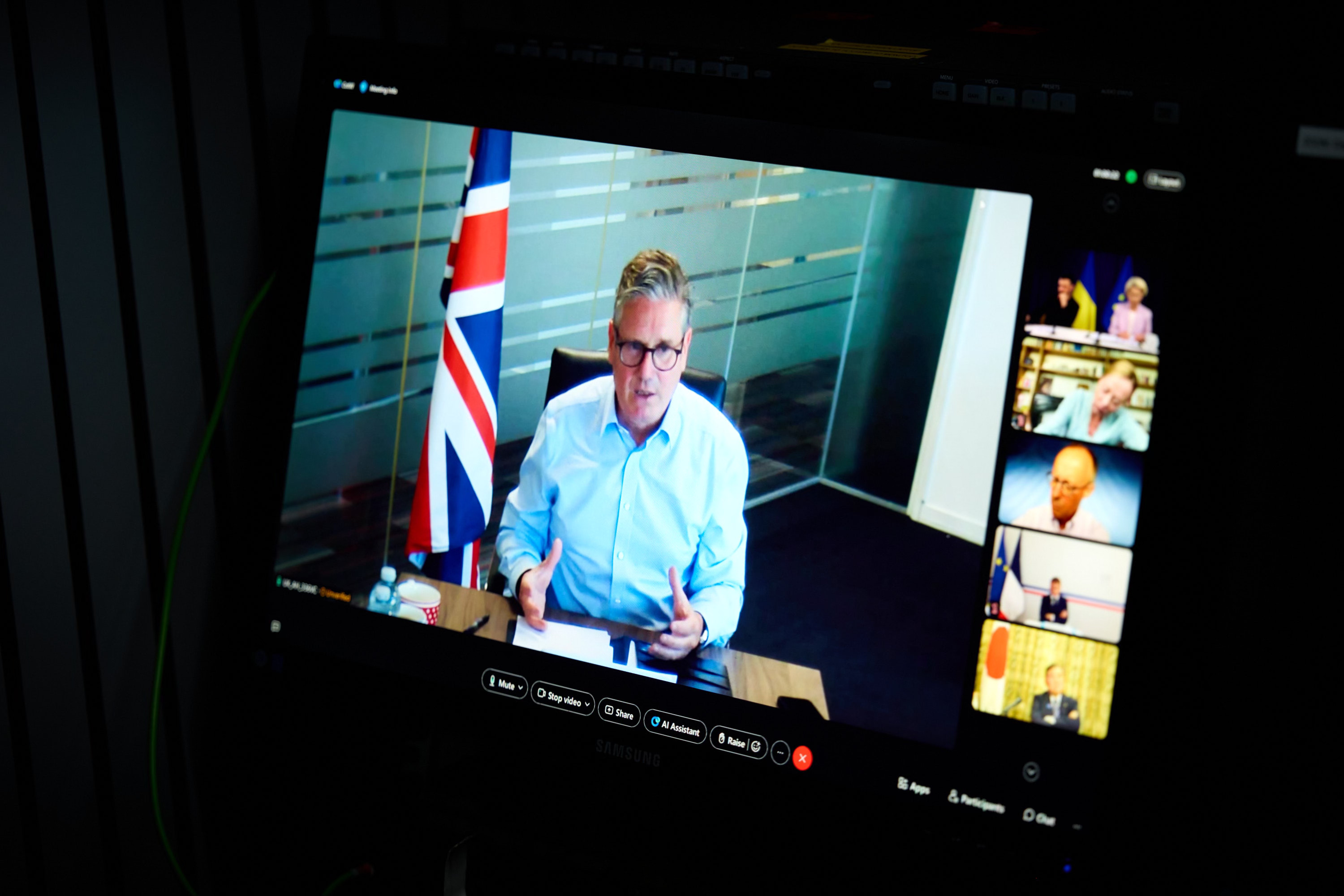
Zelensky nevertheless accepted Trump’s invitation to come to Washington on Monday and discuss Putin’s proposal, hoping that this might lead to a trilateral meeting of the three leaders. Fearful that Trump might ambush Zelensky as he had in their last Oval Office meeting in February, the leaders of Britain, France, Finland, Germany, Italy, NATO, and the EU all decided to join the Ukrainian president in Washington tomorrow.
When they sit down in the Oval Office Monday afternoon, the Europeans should have one overriding message for the US President: You are either with us or you are against us. Our position is clear and unchanging. It’s your decision — you can stand with Putin or you can stand with us. And when it comes to the European position they want Trump to endorse, the core elements are clear:
a complete, unconditional ceasefire must precede peace negotiations;
any negotiations must be between Ukraine and Russia directly, supported by the United States and Europe;
no recognition of changes in borders brought about by force;
no limits on Ukraine’s military or Russian veto on its EU and NATO membership;
Ukraine must have real, credible security guarantees with combat forces on the ground to enforce any ceasefire and final settlement;
Russia must return all the children taken from Ukraine and both sides must exchange all prisoners of war;
Russia will be responsible for financing the reconstruction of Ukraine.
When they meet with Trump in the Oval, European leaders should make clear that there is no peace or end to the war unless these elements are agreed by Russia. Putin will likely reject them; Trump should make these his own. And whether he does so or not, Europe needs to make clear that no matter his decision, Ukraine and Europe will do whatever it takes to secure a peace on these terms.