

Trump’s Security Promise to Qatar is a Big Mistake
President Trump’s executive order providing Qatar with a US security guarantee is dangerous. It will do little for Qatar, and should be deeply concerning to America’s real treaty allies.

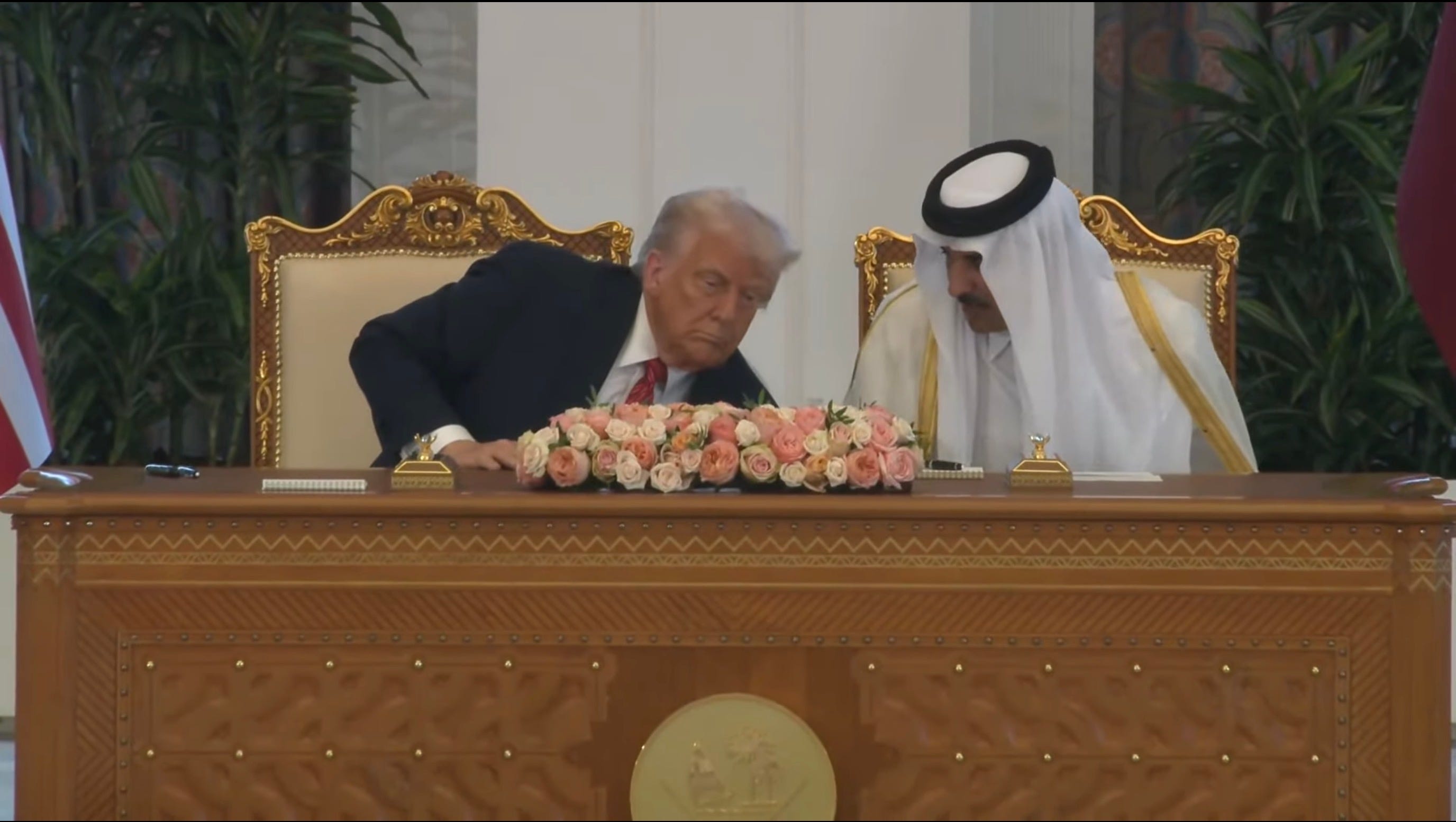
On Monday, President signed yet another Executive Order. But this one was different than the more than 200 such orders he has signed since returning to office. There was no public signing, no big media splash. It was all done behind closed doors.
The content was even more surprising:
It is the policy of the United States to guarantee the security and territorial integrity of the State of Qatar against external attack. The United States shall regard any armed attack on the territory, sovereignty, or critical infrastructure of the State of Qatar as a threat to the peace and security of the United States.
In the event of such an attack, the United States shall take all lawful and appropriate measures—including diplomatic, economic, and, if necessary, military—to defend the interests of the United States and of the State of Qatar and to restore peace and stability.
There are many things to say about this new US security guarantee. Until now, all US security commitments have been made in treaties approved by the Senate; this one was issued by the stroke of a sharpie. The commitment was signed after Qatar was attacked twice, first by Iran and then by Israel, while the Trump administration stood by and did nothing. As a supporter of the Islamic Brotherhood, longtime funder of Hamas (albeit with Jerusalem’s connivance), host of Al Jazeera, authoritarian government, and long-term thorn in the eyes of its Gulf neighbors, Qatar hardly fits the bill of a traditional US security ally. And then there is the Boeing 747 Qatar gave Trump earlier this year, creating the impression that the US is committing its security to Qatar in exchange for the Emir’s largesse to the President of the United States.
All this is deeply concerning. But this commitment is far more dangerous than that — not for what it says about Trump’s views of Qatar or even the likely US commitment to Qatar’s security (which, after all, hosts the largest US military base in the region). But because of what it says about Trump’s views of the US commitment to the security of America’s real and longstanding allies.
Qatar Commitment Stronger than to Japan, other Allies
While many have noted that Trump’s commitment to Qatar is similar to other US security commitments (with the difference that those are treaties and this one is not), the language in the executive order in fact goes far beyond the so-called Article 5 commitments the US has made in bilateral security treaties with countries like Japan, Korea, the Philippines, and Australia.
Here is what Article 5 of the US-Japan Mutual Security Treaty of 1960 says (other such commitments are identical):
Each Party recognizes that an armed attack against either Party in the territories under the administration of Japan would be dangerous to its own peace and safety and declares that it would act to meet the common danger in accordance with its constitutional provisions and processes.
That’s it. Unlike Trump’s commitment to Qatar, an armed attack on Japan is not necessarily a threat to US security nor is there any mention of a military response. Of course, such a threat is implied and Japan and other allies have long relied on the United States coming its defense for their security. But the United States has not formally committed to such a response. In other words, Trump’s commitment to Qatar is for more “NATO-like” than the US commitment to its Asian allies.1
What About Ukraine?
The news of Trump’s commitment to Qatar will have come as a shock to Ukraine, which has long sought a security guarantee from the United States (and NATO more generally), first to deter Russia from attacking and now to prevent a recurrence of war once the current conflict has ended. But even as millions of Ukrainians are fighting in the biggest land war since World War 2, halting the advance of a Russia that is intent on overturning the post-Cold War order that has served America and Europe so well, President Trump has made clear that he is not interested in guaranteeing Ukraine’s security, now or ever.
That raises profound issues of how the United States sees its national interest. For there can be little doubt that the security of Ukraine should be of greater concern to the United States than the security of Qatar. Yes, Qatar has large gas deposits. But Ukraine is a country of 40 million people, with riches in the soil and in talent that are far greater than that of the small emirate on the Gulf.
More importantly, a Russian victory in Ukraine, that would subjugate the nation to Moscow’s domination, would pose a massive security threat to Europe—still the largest trading and investment partner of the United States, not to mention home to America’s strongest and most important democratic allies. That is why so many have urged Washington and European capitals to support Ukraine in its defense and to ensure its future security as a member of NATO.
None of this seems to matter to Trump. What seems to drive him in this — as in most other instances — is personal interest, not national interest. The latter would see Ukraine’s (and Europe’s security) as foundational of American security—as it has been for more than 80 years, ever since the Japanese attack on Pearl Harbor finally convinced Americans that they needed to defeat Imperial Japan and Nazi Germany (and later contain Soviet Communism) to be truly secure. The former points to negotiating deals that serve personal — mostly financial — interests.
But while Trump may think, like Louis the XIV, that “l’État c’est moi,” America is founded on the idea that government serves “We the People” and their collective interests — not the interest of any individual, even the president’s. In making this security commitment to Qatar, Trump may be signing his own name, but in principle he is committing the entire nation to the defense of another country for reasons that should be argued and agreed, rather than asserted or assumed.
Undermining US Security Guarantees
The biggest problem with Trump’s commitment to Qatar is that it undermines the strength and credibility of America’s other, treaty-based security guarantees. First of all, unlike treaties, which are the law of the land, executive agreements are by their nature politically rather than legally binding. The next president — or even Trump himself — can undo the commitment with the same stroke of a pen with which Trump made it in the first place. While Trump’s order tasks his administration to engage Qatar on contingency planning and other ways to give form to the commitment, the reality is that this commitment is literally worth the paper it is written on.
Just ask Ukraine. In 1994, Kyiv agreed to send the nuclear weapons on its territory to Russia in exchange for an assurance by the United States, Britain, and Russia (later joined by France) to respect its borders, sovereignty, and territorial integrity. That didn’t work out very well. Or ask Saudi Arabia, America’s closest Gulf partner, which suffered a devastating missile and drone attack from Iran against its oil refinery capacity in 2019 only to have Washington do precisely nothing.
That is why real security guarantees are not just signed by executive fiat but take the form of international treaties that, in the US case, require the advice and consent of two-thirds of the Senate. Treaties make commitments real. Executive orders make commitments on paper.
Trump may not understand the difference or, if he does, he may not care. But that’s a problem not only for Qatar. It’s a problem for America’s 55 real treaty allies, in NATO and around the world, who rely on this legally binding commitment to ensure their security. By signing the executive order guaranteeing Qatar’s security, Trump may have done little to strengthen Qatar’s security but he may have done a lot to undermine the security of America’s real allies in Europe and Asia.
Article 5 of the North Atlantic Treaty states: “The Parties agree that an armed attack against one or more of them in Europe or North America shall be considered an attack against them all and consequently they agree that, if such an armed attack occurs, each of them, in exercise of the right of individual or collective self-defence recognised by Article 51 of the Charter of the United Nations, will assist the Party or Parties so attacked by taking forthwith, individually and in concert with the other Parties, such action as it deems necessary, including the use of armed force, to restore and maintain the security of the North Atlantic area.” Even here, the commitment to a military response is not ironclad, however.
Ivo, do you think Trump providing Qatar with a security guarantee is, in whole or in part, a quid pro quo for the plane? For the getting Hamas to agree to the ceasefire and hostage exchange (even though it appears that Hamas not fulfilling its end of the deal to return all 28 of the fallen hostages on 10/15 did not come as a surprise to Trump)? Other