

This is How NATO Dies
A new Pentagon questionnaire sent to America's 31 NATO allies puts fealty above common interests, divides the allies among themselves, weakens collective defense, and ultimately could destroy NATO.

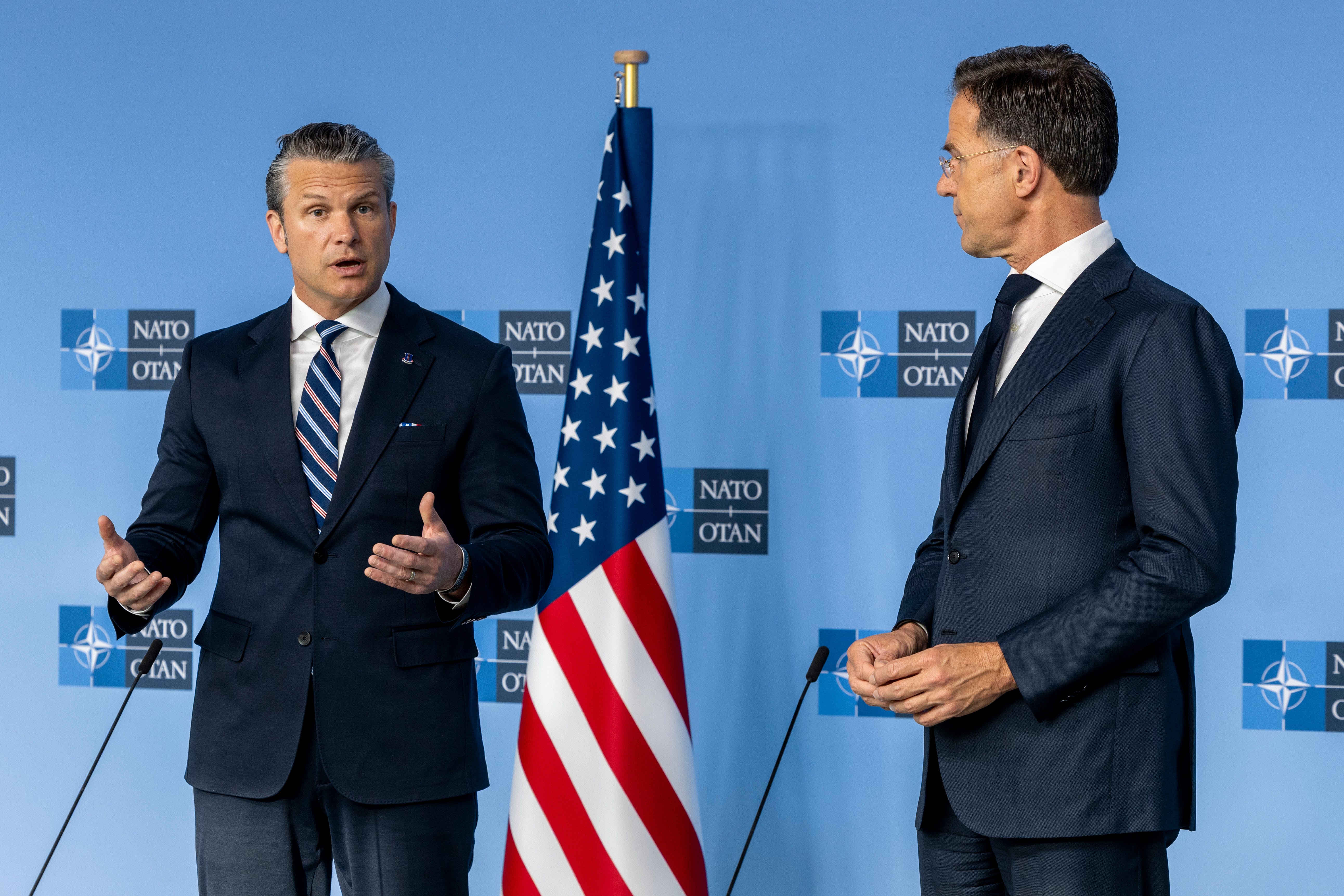
The Pentagon has a new question for its 31 NATO allies. It isn’t about troop levels or spending targets. It’s about loyalty. A document sent to all allied capitals asks each ally whether it has been “publicly supportive” of Donald Trump’s foreign policy — and hints that the answer will help determine which U.S. forces stay in Europe and which don’t.
This document, reported by Bloomberg, is part of the Pentagon’s six-month posture review first revealed by Pete Hegseth at the last NATO Defense Ministerial meeting in June. While the Defense Secretary promised “a real review,” the questionnaire underscores that its intent is nothing of the sort. It asks whether allies have been “publicly supportive” of Trump’s foreign policy, have placed “restrictions” on the use of U.S. bases, have “publicly opposed regulations” that “inhibit” contracts with U.S. firms, and have supported “made in Europe” procurement rules that the Pentagon opposes. To underscore its true purpose, the document asks: “Has the country shown alignment with the US approach to ‘strong, clear, and quiet’?”
“It is about loyalty — not to the United States, but fealty to Donald Trump, a person who occupies the presidency for a limited period of time.”
Let’s be clear. This list of questions has nothing to do with strengthening the Atlantic Alliance or creating a so-called “NATO 3.0.” It is about loyalty — not to the United States, as the primary security provider, and its security interests, but fealty to Donald Trump, a person who occupies the presidency for a limited period of time.
NATO allies have demonstrated their commitment to the alliance and to U.S. security in blood and treasure. When the U.S. was attacked nearly 25 years ago by terrorists who had turned conventional jetliners into weapons of mass destruction, the allies stood as one — invoking Article 5’s collective defense provision for the first and only time. Every ally sent troops to Afghanistan, collectively suffering more than 1,000 deaths and many multiples of casualties.
At their core, security alliances are about a common perception of the threat and a deep commitment to see one’s own security as inextricably linked with the security of one’s allies. That has been true for NATO since its founding in 1949. But the Trump administration has rejected both core principles, siding with Russia on the issue of Ukraine and rejecting the core idea — central to U.S. national security since Franklin Roosevelt took the United States into World War II — that America’s security is inextricably linked with Europe’s.
Not Burden-Sharing
The Pentagon questionnaire now makes that patently clear. The issue is no longer one of burden-sharing — or even rebalancing an unbalanced alliance — a key objective of every U.S. president and administration since Harry S. Truman asked Europe to provide the bulk of the army divisions for the defense of the continent. It is about fealty to the foreign policy of a singularly disruptive president who has made his disdain for allies abundantly clear, including by raising tariffs on their exports and demanding they buy American rather than European.
And the Pentagon isn’t making any bones about it. Hegseth’s policy chief, Bridge Colby, recently traveled to Southeast Asia to repeat a message he had earlier sent to allies in Europe. “The simple fact is that countries can no longer take America for granted,” Colby told an audience in the Manila, which finds itself at loggerheads with Beijing over control of islands in the South China Sea. “No longer can countries simply assume America will go along with unbalanced relationships that are not clearly in Americans’ practical interests.”
Apparently, the lack of balance now determines America’s “practical interest.” Not the threat. Not America’s security interest. But balance and fealty to U.S. policies and commercial interests.
Thirty-One Separate Bargains
All of this is bad enough. What makes the Pentagon questionnaire worse is that it was sent to each ally’s capital, not through NATO. This is a deeply divisive effort that will undermine NATO cohesion and collective defense. Each ally now has to balance its interest in strengthening European defense cooperation — ostensibly the heart of Washington’s “NATO 3.0” notion — with demonstrating loyalty to the United States. In effect, this presents all 31 allies with a classic prisoner’s dilemma: defection has an immediate payoff for each ally, even though solidarity would leave everyone more secure.
This doesn’t strengthen or unite NATO. It weakens, divides, and can ultimately destroy it.
NATO Secretary General Mark Rutte has sought to minimize this tension by declaring that the Pentagon’s approach has the effect of “bringing NATO closer together.” Nonsense. It does the exact opposite — splitting the United States from its 31 allies, and dividing the allies among themselves. This doesn’t strengthen or unite NATO. It weakens, divides, and may ultimately destroy it.
Alliances don’t die from withdrawal from treaties. They die when members stop believing the security guarantees are unconditional — and when each one starts calculating its own bilateral odds instead of trusting the alliance itself. Thirty-one separate loyalty tests isn’t an alliance policy. It’s an alliance’s obituary, written one country at a time.
Agree. Another nail in the coffin.
Very scary indeed