

The US is Decoupling from Europe
A dominant fear during the Cold War, Europe now worries that Trump's America is actively decoupling from the United States

During much of the Cold War one of Europe’s dominant fears was that US and European security would decouple—a situation in which the United States would no longer be willing or able to come to Europe’s defense. The cause of these fears were always Soviet actions—think the launch of the Sputnik satellite, which suggested Moscow would soon have the ability to target the United States directly with nuclear missiles; or the Soviet deployment of the SS-20 nuclear missiles that could reach all of Europe, but not the United States.
Today, European fears of decoupling are back. But this time, I argue in my latest “From Across the Pond” column, the fears are driven by US actions rather than Russia’s.
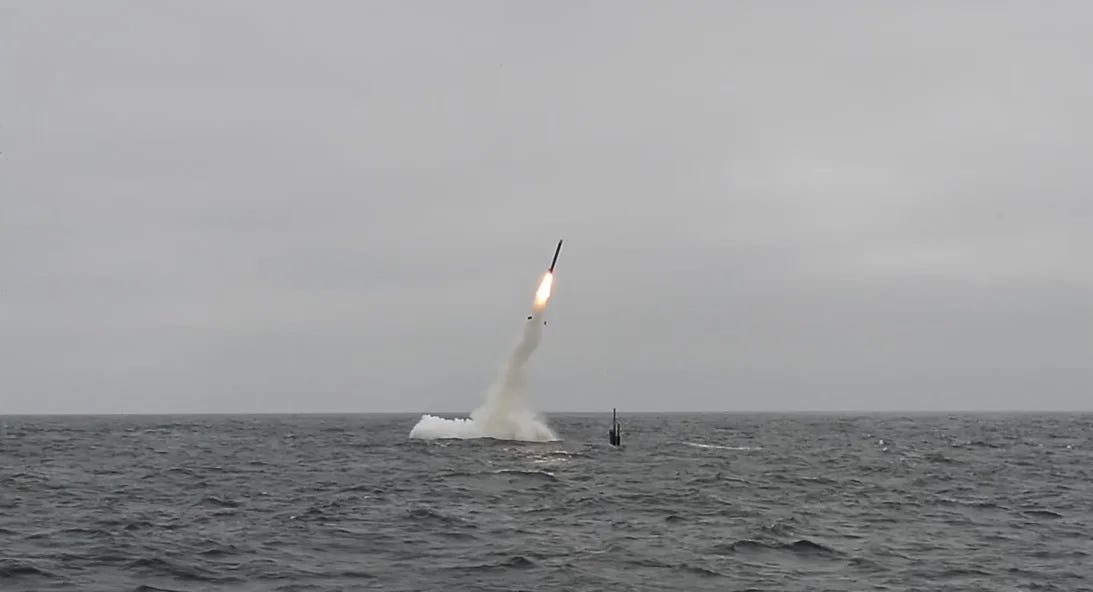
When news broke that the Pentagon wouldn’t sell long-range Tomahawk missiles to Germany, it suggested Washington might fear Moscow would view such a capability in Europe’s hands as dangerous escalation.
The move came on the heels of similar signs of U.S. disengagement that had been going on for weeks, including the decision to withdraw 5,000 troops from Germany, halt the planned deployment of a U.S. battalion equipped with Tomahawk missiles, and make severe reductions in planned U.S. contributions of bombers, fighters, destroyers, submarines and other forces needed to bolster NATO defenses in a crisis or attack.
The Pentagon claims these steps are necessary to rebalance European and U.S. contributions to the continent’s defense, but the decision to halt the Tomahawk sale points to a far more disquieting reality: Not only is Washington no longer deploying deep precision strike systems to Europe, it’s also denying its European allies the capacity to arm themselves with these systems out of fear of Russia’s reaction.
In other words, the U.S. is now actively looking to decouple its security from Europe’s.
Read the entire article at Politico Europe.
The Tomahawk decision and the other steps toward disengagement you note reflect application of the administration’s strategy documents.
The National Security Strategy stated: “Managing European relations with Russia will require significant U.S. diplomatic engagement, both to reestablish conditions of strategic stability across the Eurasian landmass, and to mitigate the risk of conflict between Russia and European states.”
The National Defense Strategy argued: “… although the Russian military threat is primarily focused on Eastern Europe, Russia also possesses the world’s largest nuclear arsenal, which it continues to modernize and diversify, as well as undersea, space, and cyber capabilities that it could employ against the U.S. Homeland. In light of this, the Department will ensure that U.S. forces are prepared to defend against Russian threats to the U.S. Homeland. The Department will also continue to play a vital role in NATO itself, even as we calibrate U.S. force posture and activities in the European theater to better account for the Russian threat to American interests as well as our allies’ own capabilities.”
Maintaining effective deterrence and defense will require ensuring the pace of U.S. force withdrawals is in synch with European readiness to assume primary responsibility for defense of the continent, which SACEUR Gen. Grynkewich told the Senate Armed Services Committee in March would likely take allies until 2035 assuming they sustain their defense investment pledges.