

The Return of 19th Century Imperialism
Donald Trump's threat to seize the Panama Canal, invade Greenland, and annex Canada is no joking matter. He's very serious about it.

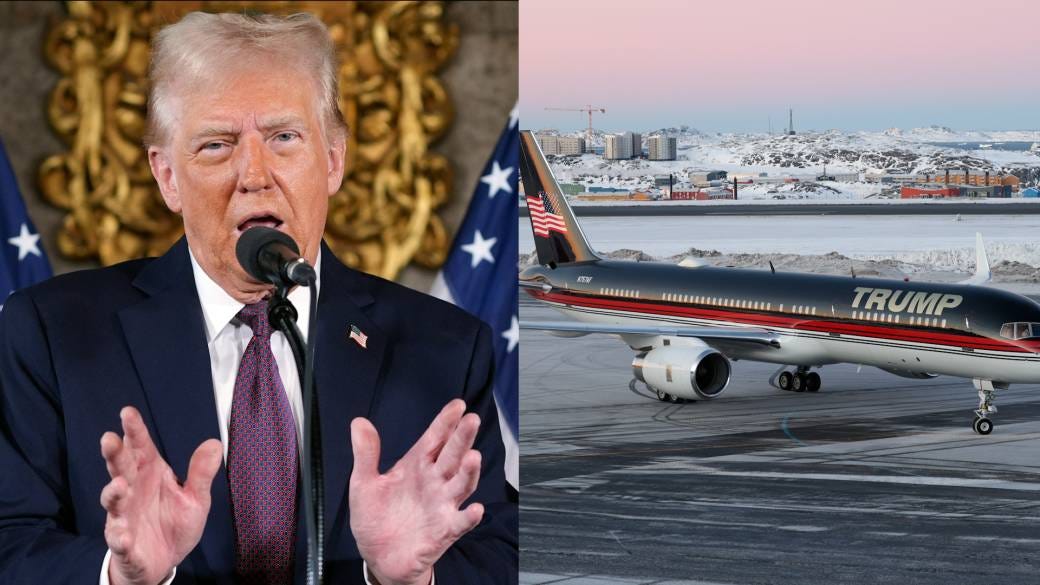
Earlier this week, incoming president Donald J. Trump sounded like a late 19th century imperialist. Asked whether he would rule out using military force to seize the Panama Canal or Greenland, Trump was emphatic: “I’m not going to commit to that,” the president-elect declared. “It might be that you’ll have to do something. The Panama Canal is vital to our country.” Adding, “We need Greenland for national security purposes.”
He didn’t repeat his military threats towards Canada. But his desire to annex the country was nonetheless clear:
You get rid of that artificially drawn line, and you take a look at what that looks like, and it would also be much better for national security. Don't forget, we basically protect Canada. But here's the problem with Canada. So many friends up there, I love the Canadian people. They're great, but we're spending hundreds of billions a year to protect it. We're spending hundreds of billions a year to take care of Canada. We lose in trade deficits.
Should we take Trump seriously or is he just blowing steam? And if we do take him seriously, what does it all mean? For America’s role in the world? For the countries involved? For America’s allies? For its adversaries?
I posed these questions to three people whose ideas and insights I greatly value in this morning’s World Review: Susan Glasser of The New Yorker, and coauthor of The Divider: Trump in the White House, 2017-2021; Philip Stephens, contributing editor and author of the Inside-Out Substack; and Ravi Agrawal, editor-in-chief of Foreign Policy and host of FP Live podcast.
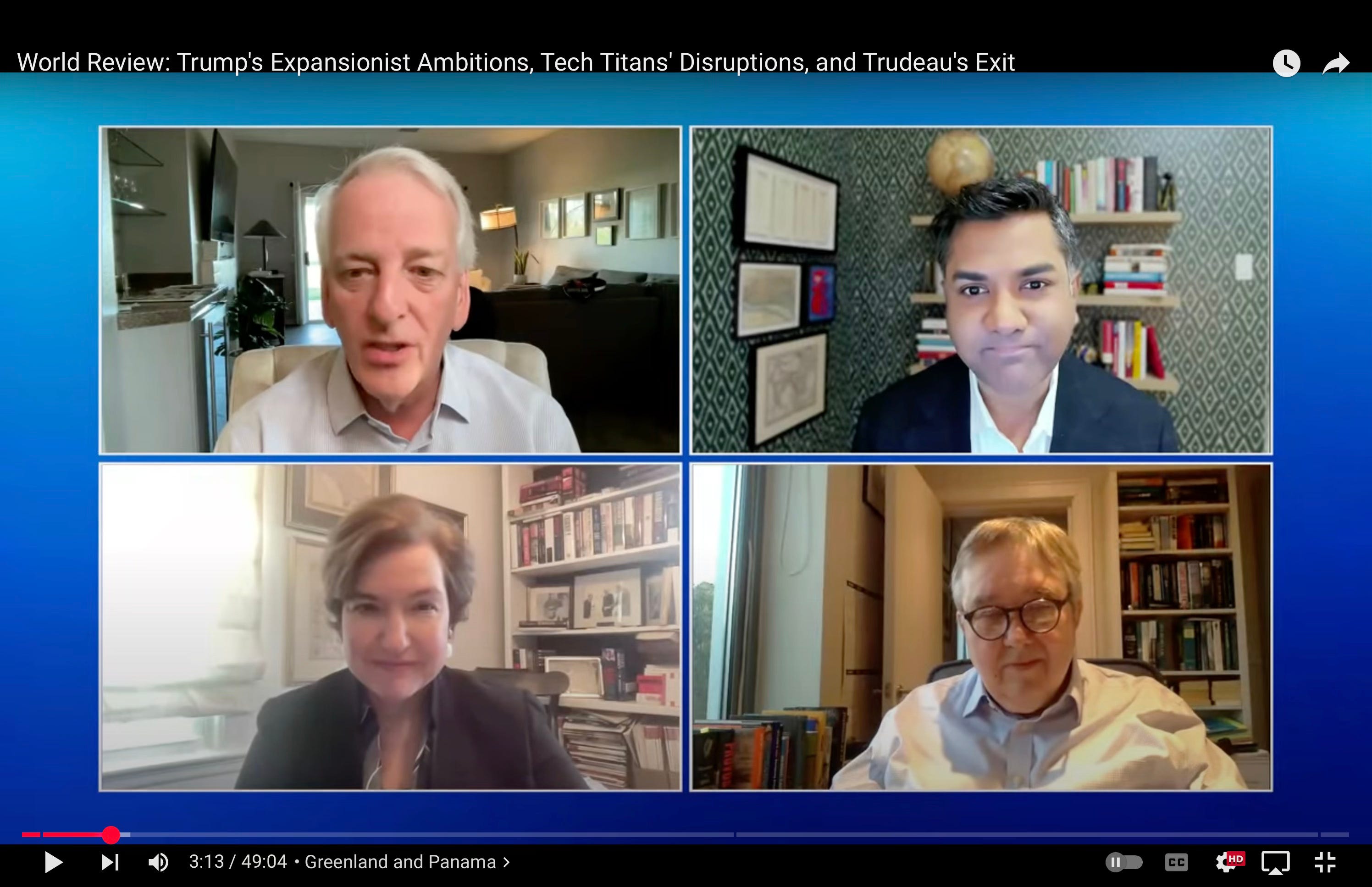
The whole discussion is worth watching (click here). But let me highlight three big points:
Susan persuasively argued that Trump is deadly serious about these threats. She recounted how in the course of writing The Divider, she and her coauthor Peter Baker discovered that during his first term, Trump had pushed repeatedly to buy the largest island in the Arctic region. When John Bolton became Trump’s third national security advisors, one of the first things Trump told him was to get this done.
Philip reminded us that the US strategic interest in Greenland and Panama was and is very real. Trump wasn’t the first president to want to buy Greenland; Harry Truman offered to do so in 1946, settling for obtaining strategic basing rights instead. And the Panama Canal was under US control until 1999 under a treaty the late Jimmy Carter negotiated in the 1970s over the opposition of Ronald Reagan and many Republicans.
Ravi argued that Trump might be looking to dominate the Hemisphere in ways the US hasn’t tried for many decades. Marco Rubio is the first Latino Secretary of State, with a strong interest in Latin America. In a world of competing powers, each with their own spheres of influence, it is hardly surprising that the United States would want to control its own sphere.
There was much more in the discussion we had. I urge you to watch it, share it, and comment on it.