

The American Way of Losing Wars
Why does the most powerful military on earth keep losing the wars it starts? The answer isn't firepower. It's thinking.

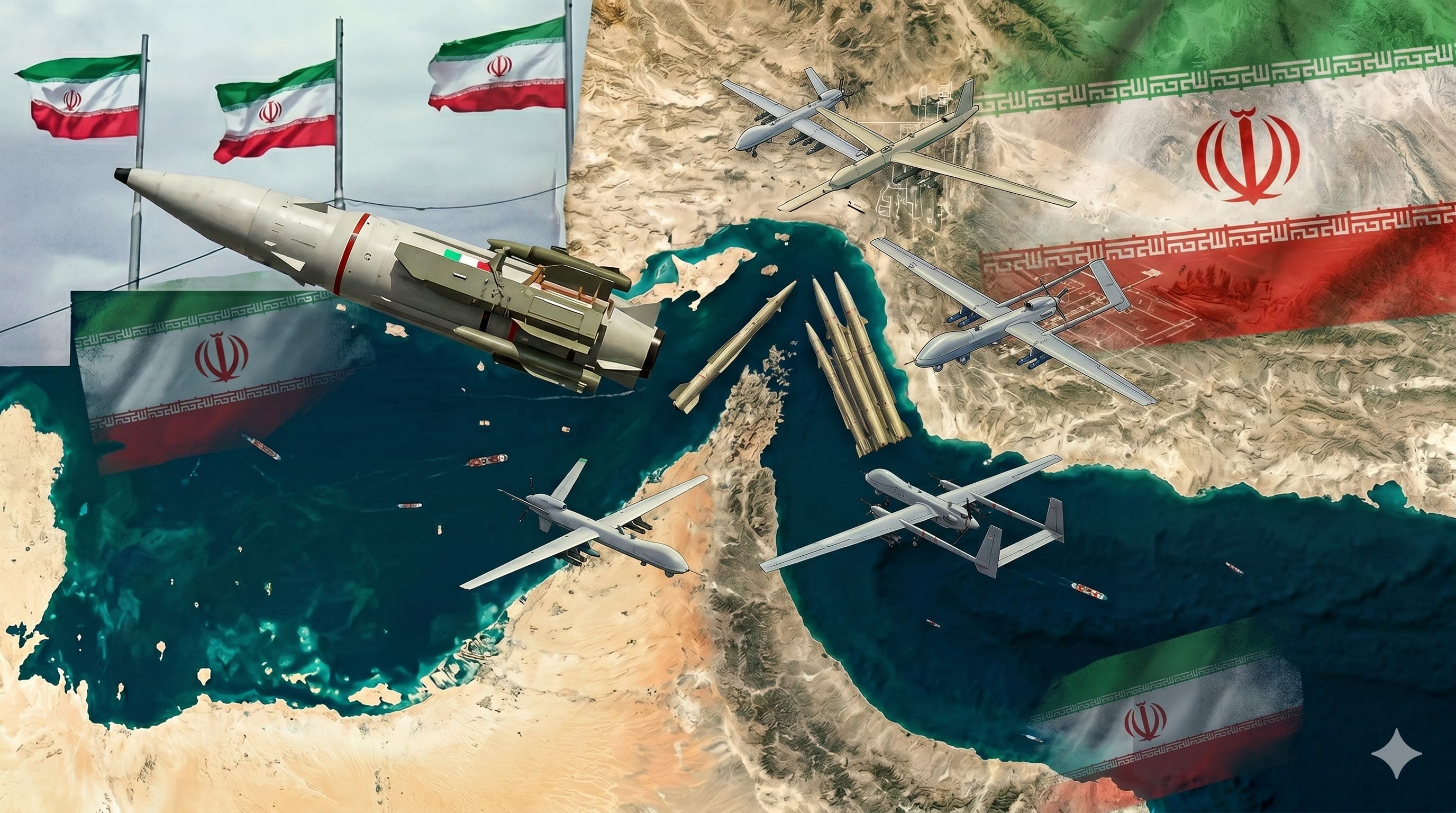
Since 1945, America has fought in Korea, Vietnam, Afghanistan, Iraq and now Iran. Only the 1991 Gulf War counts as a genuine success. The rest range from stalemate to defeat to strategic catastrophe. The pattern is no coincidence — it reflects three structural flaws in the American way of war that span decades and both parties.
This is the subject of my latest From Across the Pond column.
The great Prussian military strategist Carl von Clausewitz defined war as the continuation of politics by other means. The military is a servant of political ends — one tool among many, and always in service of a clearly defined objective.
The U.S. has inverted this theory. Washington treats war not as a continuation of policy but as the failure of policy — a last resort that is reached when diplomacy collapses, often with no set political outcome in mind. The results are always the same: force deployed with no clear ends, and no answer to a question that should precede every decision to fight — what does winning actually look like?
U.S. President Donald Trump is the most extreme expression of this problem. In Iran, performative diplomacy was conducted by envoys who understood neither diplomacy nor nuclear physics. Then came a massive bombing campaign, premised on the magical belief that destruction produces capitulation — or, as the president put it this past weekend: We will either get a “good” deal or else we’ll “blow them to kingdom come.” But the end result will be neither.
We know this because while Trump may be the most radical manifestation of America’s faulty approach, he is hardly alone.
The U.S. way of war is built on three structural flaws. First, the ends and means are inverted: Rather than define a political objective and then select the appropriate instrument, Washington does the reverse. It reaches for the military tool and hopes the politics will follow. “Rolling Thunder” in Vietnam, “Shock and Awe” in Iraq, “Epic Fury” in Iran — each time the U.S. deployed overwhelming force in the belief that wholesale destruction will produce the desired outcome.
It never does.
Read the entire article on Politico Europe.
Ivo, former Foreign Service Officer here. I used to catch your sessions at the Chicago Council, and I still read you for the same reason I did then. You start from the structure and not the headline.
The Clausewitz inversion is the right frame, and I would push it one step further. The three flaws you name are not really flaws of strategy. They are flaws of accountability. A war fought without a defined political objective is a war no one can be said to have lost. That is not a bug for the people who order it. That is the appeal. Ambiguity at the front end guarantees deniability at the back end. Nobody signs their name to “kingdom come.”
Vietnam, Iraq, now Iran. The constant is not bad planning. It is that the planners face no cost for the absence of a plan. Force gets reached for because it photographs as resolve, and resolve polls well (usually, if it happens), and the bill arrives long after the news cycle has moved on. The means are inverted because the incentives are inverted.
Define winning before you fight, and you create a standard you can be measured against.
Washington has learned, across both parties, that the safest war is the one with no finish line.
Good to be reading you again.
Johan 🐌
P.S. On March 8, I wrote an article titled the Cascade—Iran, Game Theory…this is the slow burn I predicted back then. I invite you to take a look.
The link to the article in Politico is not working because the link is in there twice. The correct link is: https://www.politico.eu/article/america-us-donald-trump-way-of-war-isnt-working/