

Is the Kirk Murder a Turning Point?
I fear not. Rather, the reaction of right-wing voices, starting with President Trump, points to a further deterioration of democracy and another step towards an authoritarian future.

(A slightly shorter, edited version of this post appears in The Observer today.)
The cold-blooded murder of Charlie Kirk at a university campus in Utah evoked many emotions. Here was a 31-year-old father of two, whose life had been cut short by an assassin's bullet. Thoughts went to his young family and those who loved and knew him. Some worried this was another instance of political violence and feared of more to follow. A few, including Spencer Cox, the Republican governor of Utah, called for calm, prayer, and reflection.
Not so, many of the loudest voices on the right. Their first reaction was to blame their political opponents. Elon Musk denounced the left as “the party of murder.” Congresswoman Anna Paulina Luna, a Florida Republican, shouted down Democrats on the House floor: “Y’all caused this. You fucking own this.”
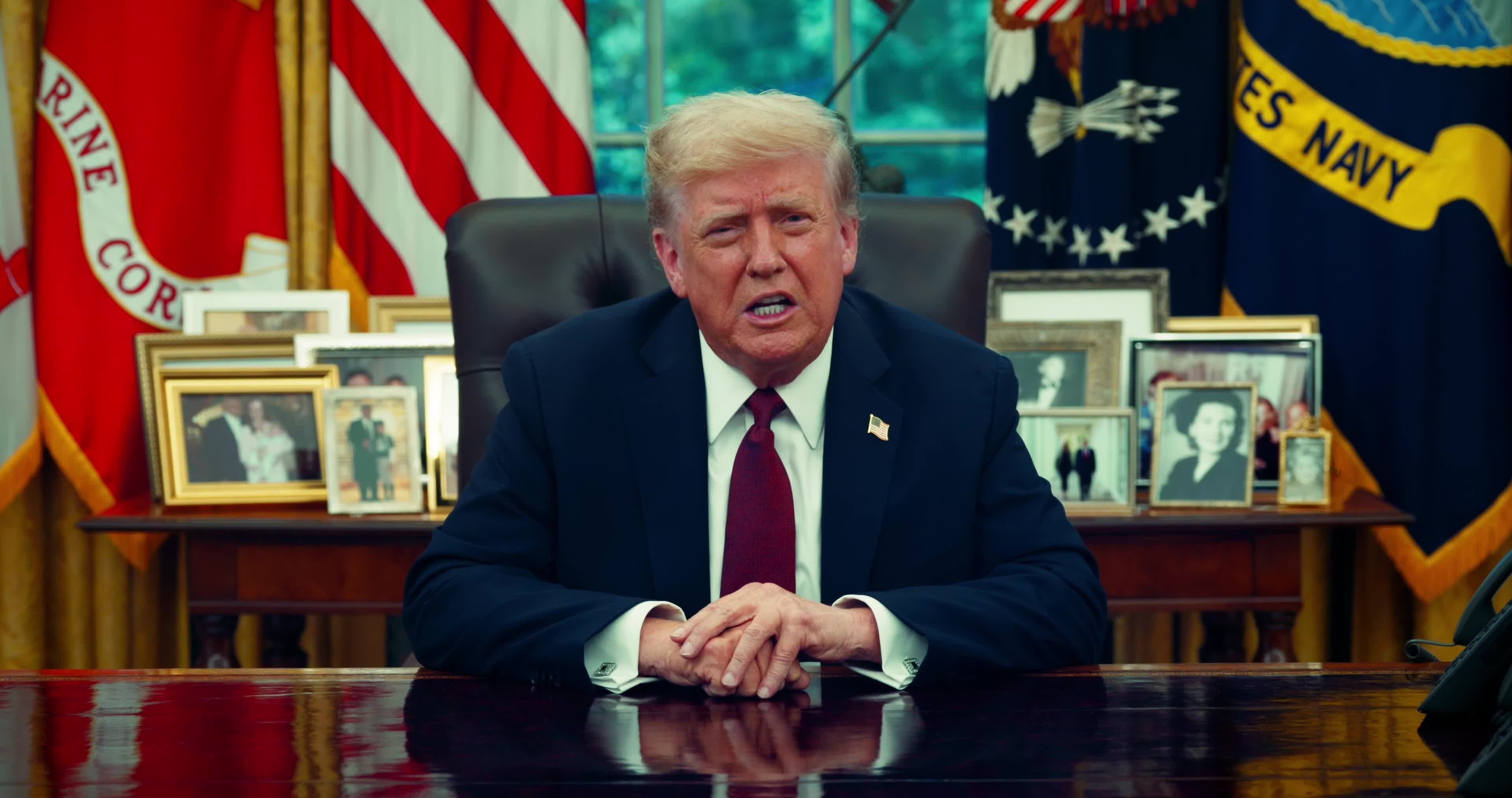
But the most worrisome statement came from the Oval Office, where President Trump used a rare formal address to make clear who he thought responsible. “For years, those on the radical left have compared wonderful Americans like Charlie to Nazis and the world’s worst mass murderers and criminals,” the American President declared. “This kind of rhetoric is directly responsible for the terrorism that we’re seeing in our country today, and it must stop right now.”
“My administration,” Trump continued, will go after those responsible for “political violence, including the organizations that fund it and support it,” making clear that it was the “radical left” that was responsible.
It is this reaction—of casting blame and seeking retribution, rather than urging unity and calming tempers—that has left many to ask whether the Kirk murder is a turning point in American politics. “Is this the end of a dark chapter in our history,” Governor Cox asked, “or the beginning of a darker chapter in our history?”
I fear it is neither. Instead, it is part of a larger pattern, where politics is not a competition between ideas but a civil war between two sides, with one blaming the other for all the ills in our country. “Charlie Kirk is a casualty of war,” Steve Bannon, Trump’s former political advisor, remarked. “We are at war in this country.”
The reaction to Kirk’s murder is yet another step along a path towards authoritarianism that many have feared and some warned against. Voices on the right are trying to weaponize this latest act of violence to go after their political adversaries. White supremacists like Matt Forney compared Kirk’s death to the 1933 burning of the German Reichstag—an act that gave Hitler and his Nazis the excuse to go after their political opponents. “It is time for a complete crackdown on the left,” said Forney. “Every Democratic politician must be arrested and the party banned.”
Lest anyone think this is an over-reaction explained by the moment, Stephen Miller, Trump’s chief policy guru, said much the same on FoxNews two weeks before Kirk’s killing. “The Democratic Party is not a political party,” Miller told Sean Hannity. “It is a domestic extremist organization,” intimating there is no place for such an organization in American political life.
I observe this development with deep sadness, but not with surprise. I am an American by choice—an immigrant, who came to the United States more than 40 years ago in search for a better life and larger opportunities. I found both. I married the love of my life, succeeded professionally, and even had the extraordinary privilege of representing my adopted country at NATO. Where else can a foreigner succeed as I did, but in America?
And, yet, for the past decade I have looked on with growing concern as my new home showed many of the signs of a country slipping into authoritarianism. I warned about this possibility a year ago in an essay in The Atlantic. “History teaches us that democracies founder when a charismatic leader emerges to lead a movement of subservient followers,” I wrote. “Unity is bolstered by identifying a distinct enemy who can be blamed for social ills and economic plight,” and warned that “violence against the enemy forms an essential part of creating and growing the movement and its power. Victory is made possible by the steady erosion of the norms, rules, and basic rights that are the foundation of democracy.”

America has followed this path since January 20, 2025. Trump controls not only the Executive, but through his party and past judicial appointments, he controls Congress and the highest court—which until now has given the president large leeway in executing presidential power in unprecedented ways. Now, he and his party are moving to retain power through partisan redistricting designed to secure Republicans their congressional majority. Is banning the opposition party next?
Charlie Kirk’s death may or may not produce this next step. But even if this moment does not provide that spark, no one should be surprised when it actually happens.
Regrettably, I think you are correct. (small correction: Stephen Miller, not Steven).
A chunk of those American right-wing voices, such as Nick Fuentes, targeted Charlie Kirk as a rival to be removed.
https://www.rauhauser.net/p/a-preference-for-peace
https://www.bugeyedandshameless.com/p/who-was-charlie-kirk-anyway
https://scholarstage.substack.com/p/bullets-and-ballots-the-legacy-of