

For Trump, the entire Western hemisphere is America's
Trump loves the 19th century. But as with his love for tariffs, his love of dominating the western hemisphere won't work out well for America

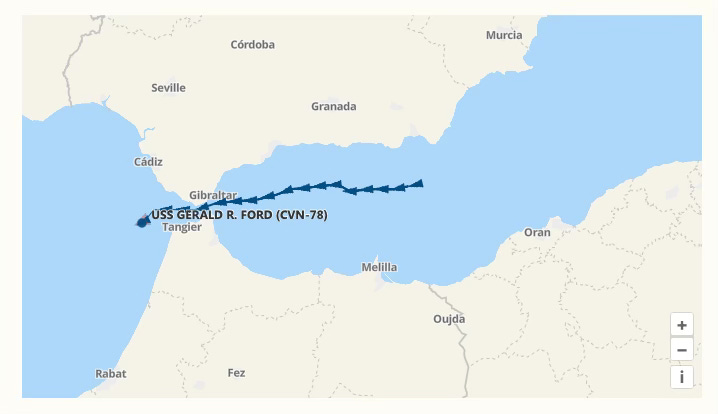
The USS Gerald R. Ford, the newest US aircraft carrier, will arrive in the Caribbean Sea later this week. Accompanied by five guided missile destroyers and other vessels that are part of a full aircraft carrier battle group, the Gerald Ford will join a large armada of naval vessels, amphibious assault ships, and forward deployed combat aircraft in the region. By the weekend, the US will have more firepower in the Caribbean than at any time since 1962, when President John F. Kennedy went toe-to-toe with Soviet General Secretary Nikita Khrushchev during the Cuban Missile Crisis.
Why, you may ask, is the US deploying this military might to its backyard? Because, as I argue in my latest Politico Europe column, Donald Trump loves the 19th century.
U.S. President Donald Trump loves the 19th century.
His heroes are former presidents William McKinley who “made our country very rich through tariffs,” Teddy Roosevelt who “did many great things” like the Panama Canal, and James Monroe who established the policy rejecting “the interference of foreign nations in this hemisphere and in our own affairs.”
These aren’t just some throw-away lines from Trump’s speeches. They signify a much deeper and broader break from established modern national security thinking.
Trump is now the first U.S. president since Franklin D. Roosevelt to believe the principal threats to the U.S. aren’t in far-away regions or stem from far-away powers — rather, they’re right here at home. For him, the biggest threats to America today are the immigrants flooding across the country’s borders and the drugs killing tens of thousands from overdoses.
And to that end, his real goal is to dominate the entire Western hemisphere — from the North Pole to the South Pole — using America’s superior military and economic power to defeat all “enemies,” both foreign and domestic.
Read the entire article on Politico Europe.